Alfan Jauhari
EST2025

Architecting

Tomorrow's

Digital

Landscape

Loading...
AJ.
Back to Home

BAKTI DNA

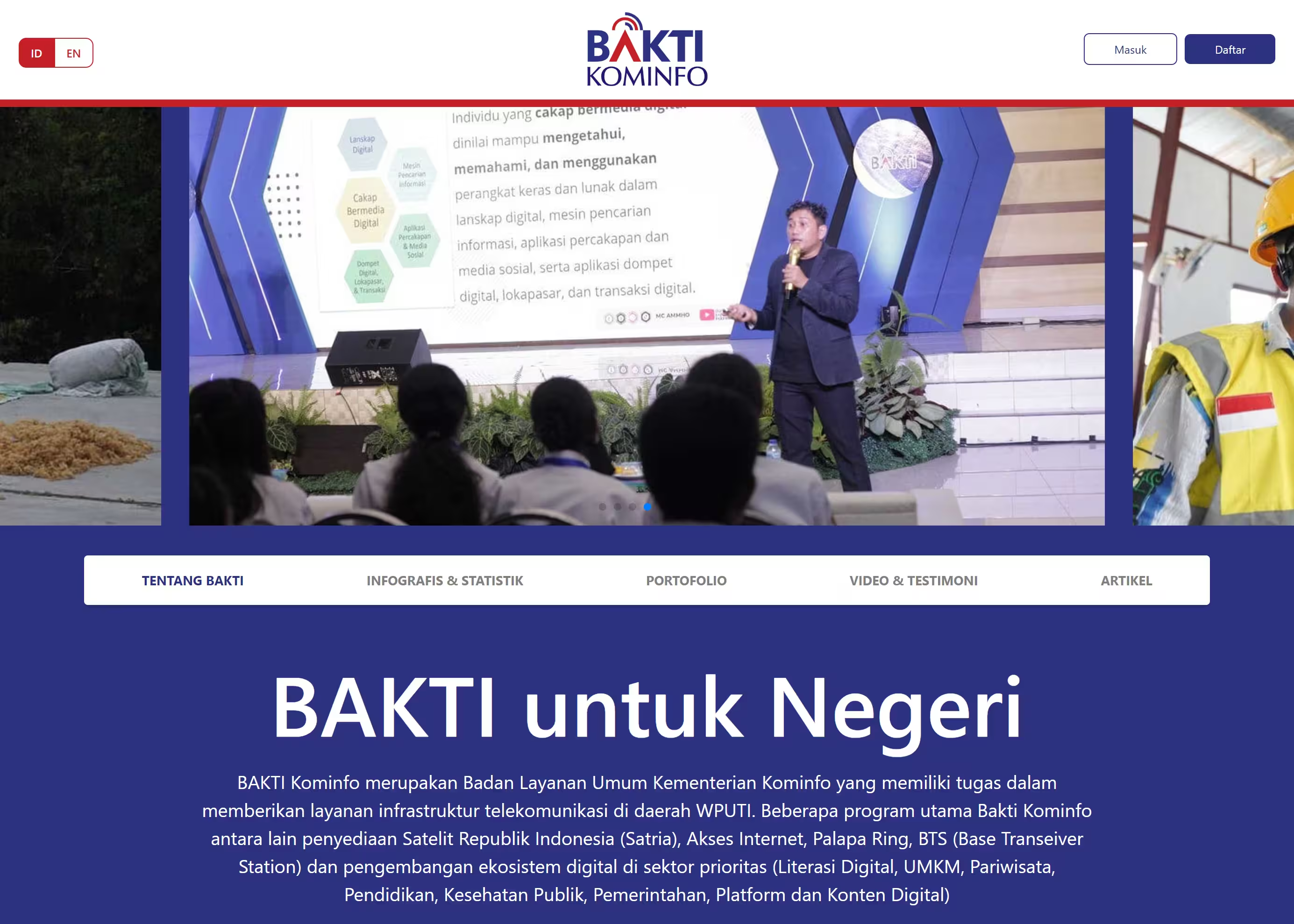
A national-scale telecommunications infrastructure platform delivering connectivity to remote regions through satellite services, internet access points, backbone networks, mobile base stations, and digital-ecosystem enablement programs across priority sectors.

Client

Kemenkominfo

Role

Product Engineer II

Year

2022

Technologies Used

TypeScript
NextJS (13)
NX
Chakra UI
Live Website

The Challenge

The client needed a unified platform capable of managing thousands of satellite links, internet access points, backbone nodes, and BTS assets distributed across remote regions. Existing systems were fragmented, relied heavily on manual data reconciliation, and struggled to deliver accurate operational visibility especially for infrastructure in hard-to-reach WPUTI areas.

The Solution

We designed and implemented an integrated infrastructure management system with automated data ingestion pipelines, geospatial mapping, and real-time status monitoring. The platform consolidates satellite, fiber, and BTS data sources into a single operational dashboard, enabling proactive issue detection and streamlined field coordination. By optimizing API communication, caching, and background sync processes, the system ensures reliable performance even with intermittent connectivity typical of remote deployments.

About BAKTI DNA

BAKTI DNA Ecosystem is the official digital platform of BAKTI Kominfo the public service agency under the Indonesian Ministry of Communications and Informatics, responsible for delivering national telecom infrastructure (satellite, internet access, backbone, BTS, etc.).

BAKTI DNA provides a unified “analytical dashboard” aggregating data about infrastructure deployment and digital ecosystem initiatives across Indonesia. Through this portal, stakeholders (government, partners, public) can view and access information about programs such as free internet access, satellites, BTS networks to broader digital-ecosystem efforts in education, UMKM (micro-small businesses), tourism, healthcare, e-government, and more.